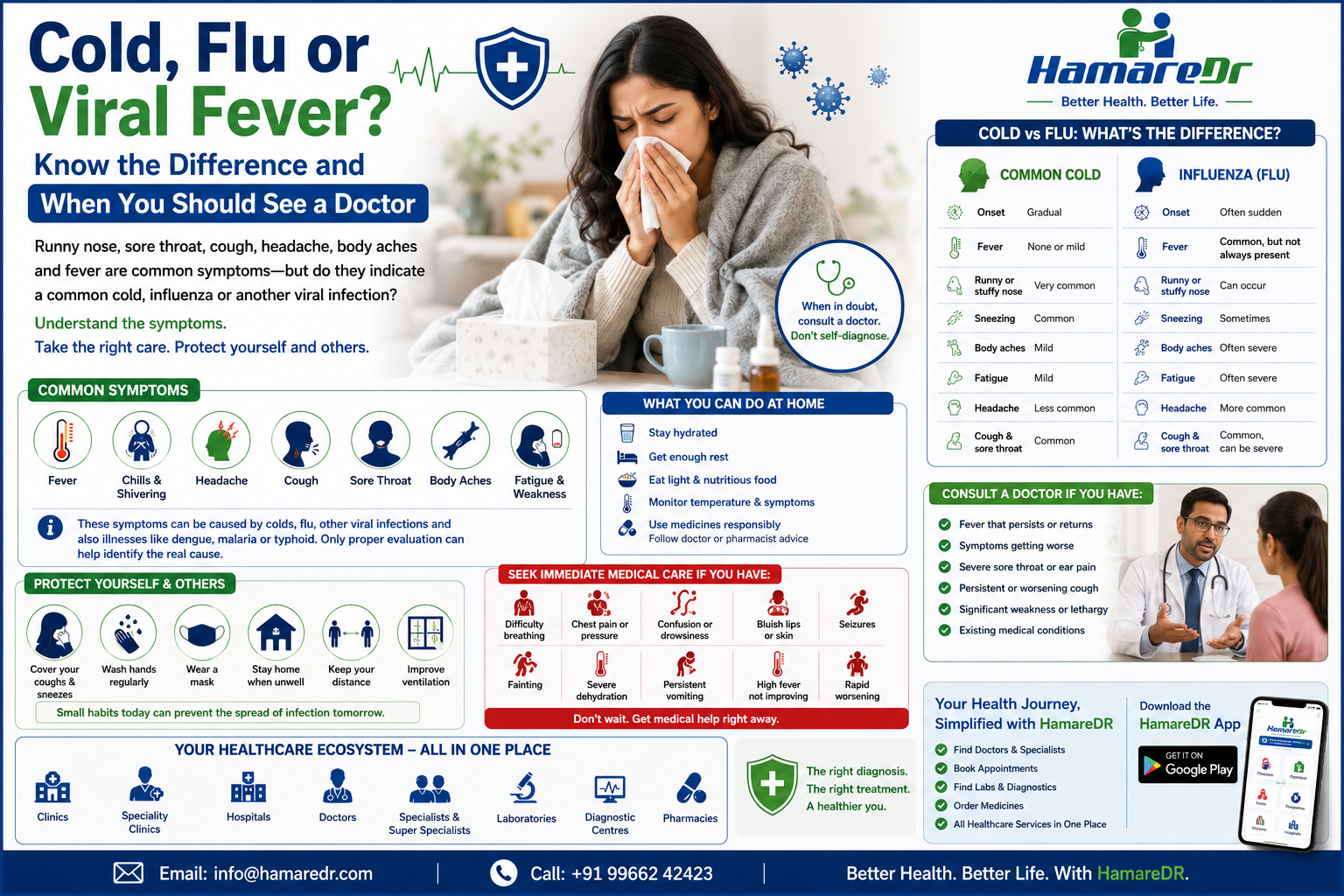
Runny nose, sore throat, cough, fever, headache and body aches are common symptoms—but is it a common cold, influenza or another viral infection? Understanding the differences can help you manage mild symptoms appropriately, avoid unnecessary antibiotics and recognize when it’s time to consult a doctor.
Woke Up With a Sore Throat, Cough or Fever?
Your throat feels scratchy ?
Your nose is blocked or constantly running ?
You have started coughing ?
Your body feels unusually tired and achy ?
And now—you have a fever ?
The first question that probably comes to mind is: “Is this a cold, flu or viral fever?”
The confusion is understandable because many respiratory infections produce similar symptoms. Most uncomplicated viral infections improve with time, rest and appropriate supportive care. But some illnesses can become more serious or may initially look like an ordinary viral infection. Knowing what your symptoms could mean and when to seek medical attention can help you make better healthcare decisions.
The common cold is a viral infection that mainly affects the nose and throat. Many different viruses can cause it. Symptoms usually develop gradually and commonly include:
Runny or blocked nose
Sneezing
Sore throat
Cough
Mild headache
Mild body aches
Tiredness
Adults with an ordinary cold often have no fever or only a mild fever. Most uncomplicated colds improve without specific medical treatment.
Influenza is also a viral respiratory illness, but it is specifically caused by influenza viruses. One noticeable difference is that influenza can sometimes make you feel unwell quite suddenly. You might feel relatively normal in the morning and, within hours, experience fever, chills, headache, body aches and significant tiredness. Common flu symptoms can include:
Fever or feeling feverish
Chills
Headache
Muscle and body aches
Significant tiredness
Cough
Sore throat
Runny or blocked nose
Not everyone with influenza develops every symptom, and some people may not develop a fever. While many people recover from influenza with appropriate supportive care, it can sometimes cause complications such as pneumonia, particularly among people at higher risk.
You've probably heard someone say: “It's just viral fever.” But viral fever isn't one specific disease. It is a commonly used term for a fever caused by a viral infection. Many different viruses can cause fever, and depending on the infection, symptoms may include:
Fever • Headache • Body aches • Fatigue • Cough • Sore throat • Runny nose • Digestive symptoms
This is why the term “viral fever” doesn't necessarily tell you which virus is responsible. A healthcare professional may consider your symptoms, duration of illness, examination findings, exposure history and other factors before determining whether further investigation is required. Cold or Flu? Look at the Overall Pattern Although there can be considerable overlap, the overall pattern of symptoms may provide some clues.
If It Is More Like a Common Cold Symptoms often develop gradually. A runny or blocked nose, sneezing and sore throat are usually prominent. You may have a cough and feel tired, but severe body aches and significant exhaustion are generally less typical. Fever is less common in adults and, when present, may be mild.
If It Is More Like Influenza : Symptoms can appear more suddenly. Fever, chills, headache, noticeable body aches and significant fatigue can be more prominent. Cough and sore throat are also common, while a runny or blocked nose may occur. Some people describe influenza as feeling as though they have been “hit all at once.” However, these are only general patterns. Symptoms alone cannot always reliably distinguish influenza from other respiratory infections.
Not necessarily. This is one of the most important things to understand about common respiratory illnesses: Antibiotics do not treat viral infections such as the common cold or influenza. Antibiotics are designed to treat certain bacterial infections. Taking them unnecessarily can cause side effects and contribute to antimicrobial resistance, making bacterial infections harder to treat in the future. Sometimes a viral illness may be followed by a bacterial complication. But whether antibiotics are required should be determined by a qualified healthcare professional. Don't start antibiotics simply because you have fever, cough or a sore throat.
Many mild respiratory viral infections can be managed with supportive care while you monitor your symptoms. Stay Hydrated Drink adequate water and appropriate fluids. Fever, sweating and reduced food intake can contribute to dehydration. Get Enough Rest Your body needs time and energy to recover. Avoid pushing yourself through strenuous activity simply because your symptoms initially appear mild. Eat Appropriately Maintain adequate nutrition as tolerated. Your appetite may temporarily decrease when you're unwell, but fluids and nutrition remain important during recovery. Monitor Your Temperature If you have a fever, keep track of your temperature and pay attention to whether it is improving, persisting or worsening. Use Medicines Responsibly Medicines for fever, pain, cough or other symptoms should be used according to appropriate healthcare advice and product instructions. Be particularly careful with combination cold-and-flu medicines. Different products can contain the same active ingredient, which could result in accidentally taking more than the recommended amount.
When you're unsure, speak with a doctor or pharmacist. Coughing and Sneezing? Protect the People Around You Respiratory viruses can spread between people, particularly when infected individuals cough, sneeze, talk or spend time in close contact with others. A few simple habits can help reduce transmission. Cover Your Coughs and Sneezes Use a tissue or cough and sneeze into your elbow rather than directly into your hands. Wash Your Hands Regularly Good hand hygiene can help reduce the spread of many infections. Avoid Unnecessary Close Contact When possible, stay home and reduce close contact with other people while you are actively unwell.
This is particularly important around people who may be more vulnerable to complications. Consider Wearing a Mask If you have respiratory symptoms and need to be around other people, a well-fitting mask can help reduce transmission. Improve Indoor Ventilation Opening windows or improving airflow can help reduce the concentration of infectious respiratory particles indoors. When you're sick, protecting others is part of taking care of your health too.
Not every fever requires laboratory testing or hospital treatment. But you shouldn't ignore a fever simply because you assume it is viral. Consider consulting a healthcare professional when:
Your fever persists or repeatedly returns
Your symptoms are becoming worse rather than improving
You experience significant weakness
You have persistent vomiting
Your sore throat becomes severe
You develop significant ear pain
Your cough persists or becomes worse
You improve initially and then suddenly become significantly worse
You have an existing health condition that increases your risk of complications
A doctor can evaluate your symptoms and determine whether further testing or treatment is appropriate.
Some symptoms shouldn't be managed at home while waiting to see if they improve. Seek urgent medical attention if you or someone you're caring for experiences:
Difficulty breathing
Severe shortness of breath
Chest pain or pressure
Confusion or unusual disorientation
Fainting
Severe dehydration
Seizures
Bluish or greyish lips or skin
Significant or rapid deterioration
Parents and caregivers should also seek prompt medical advice when an infant or young child has concerning symptoms, difficulty breathing, unusual drowsiness, inadequate fluid intake or appears seriously unwell. Fever Doesn't Always Mean Cold or Flu This is especially important in a place like Hyderabad, where a patient presenting with fever may potentially have an illness unrelated to a routine respiratory infection. For example, malaria, typhoid, dengue and other infections can also cause combinations of:
Fever • Headache • Weakness • Fatigue • Body aches
So ask yourself: Do I actually have typical cold symptoms such as a runny nose, sneezing and sore throat? Or is it mainly Persistent fever, severe weakness, chills, stomach symptoms or unusual body aches? If the fever is persistent, significant or unusual, don't automatically assume it is influenza or “viral fever.” A doctor may need to evaluate other possible causes and recommend appropriate laboratory investigations.
Certain people may have a greater risk of complications from influenza and other respiratory infections. These can include:
Older adults
Young children
Pregnant women
People with chronic heart conditions
People with chronic lung conditions
People with diabetes
People with certain kidney conditions
People with weakened immune systems
If you or someone you're caring for belongs to a higher-risk group, consider seeking medical advice earlier when significant symptoms develop.
Seasonal influenza vaccination can help reduce the risk of influenza and its complications. Vaccination recommendations can vary depending on factors such as age, existing health conditions, pregnancy, occupation and individual risk. Speak with a qualified healthcare professional about whether influenza vaccination is appropriate for you or your family. Don't Let the Thermometer Make the Diagnosis Your thermometer tells you your temperature. It doesn't tell you what disease you have. A fever could potentially be caused by:
Influenza
Another respiratory virus.
Typhoid.
Malaria.
Dengue.
A bacterial infection.
Or another medical condition entirely.
This is why repeatedly taking medicines to bring down your temperature without understanding the underlying cause isn't always the right approach. If your symptoms are mild and improving, supportive care may be enough. If they are persistent, worsening or concerning, medical evaluation matters.
The Right Question Isn't Just “How Do I Stop My Fever?”
Ask: “Why do I have this fever?”
Then pay attention to what your body is telling you :
Is your condition improving?
Is the fever continuing?
Are new symptoms appearing?
Are you becoming weaker?
Are you having trouble breathing?
Knowing when to move from home care to professional medical care is an important part of looking after yourself and your family. Feeling Unwell? Find Healthcare Support Through HamareDR , Sometimes all you need is a doctor to evaluate your symptoms and tell you whether you can safely continue recovering at home. At other times, you may require laboratory investigations, diagnostic services, prescribed medicines, specialist consultation or hospital care. HamareDR brings different healthcare providers together within one healthcare ecosystem, helping patients discover and access:
Clinics • Specialty Clinics • Hospitals • Doctors • Specialists • Super Specialists • Pharmacies • Laboratories • Diagnostic Centers
Whether you're looking for a doctor for a persistent fever, a laboratory for prescribed tests, a pharmacy for prescribed medicines or further medical care, HamareDR can help you find healthcare services for the next step in your journey.
Download the HamareDR Android App: Download on Google Play
Email: info@hamaredr.com
Call: +91 99662 42423
Cold, Flu or Something Else? : Don't guess. Don't self-medicate unnecessarily. Pay attention to your symptoms and seek the right medical advice when you need it.
This article is intended for general health awareness and educational purposes only. It does not replace professional medical advice, diagnosis or treatment. Seek appropriate medical care if symptoms are severe, persistent or worsening.