A persistent fever, headache, weakness, stomach discomfort or loss of appetite may sometimes indicate typhoid fever. Learn how typhoid spreads, the symptoms to watch for, why proper diagnosis matters, how it is treated, and the practical steps you can take to reduce your risk.
Is It Just Another Fever — Or Something More?
Have you had a fever that keeps returning or isn't getting better?
Are you feeling unusually weak or exhausted?
Have you lost your appetite?
Are you experiencing stomach pain, diarrhea or constipation along with the fever?
It is easy to assume that every fever is a routine viral infection, particularly when several illnesses can initially produce similar symptoms. But persistent fever can have many possible causes, and one of them is typhoid fever, also known as enteric fever. Rather than guessing the cause or taking medicines on your own, a persistent or worsening fever deserves proper medical evaluation.
Typhoid fever is a bacterial infection primarily caused by Salmonella Typhi. A related illness called paratyphoid fever is caused by Salmonella Para typhi. Unlike the common cold or influenza, typhoid is generally associated with consuming food or water contaminated with the bacteria. Once the bacteria enter the body, they can multiply and spread through the bloodstream. Without appropriate treatment, the illness can become prolonged and potentially lead to serious complications.
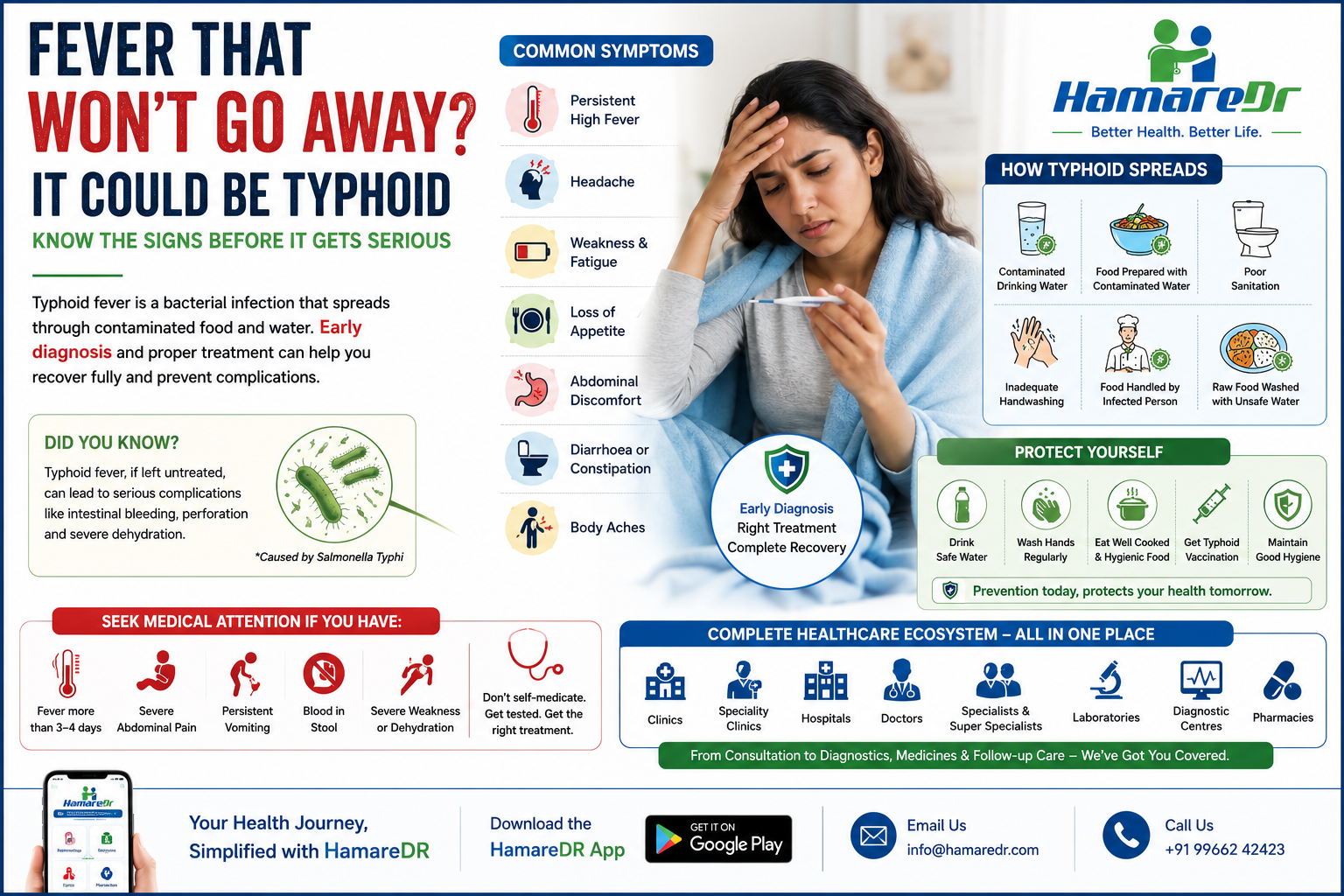
Typhoid primarily spreads through the faucal-oral route. In simple terms, bacteria from an infected person can contaminate food or water, which is then consumed by another person. Transmission may occur through:
Contaminated drinking water
Food prepared with contaminated water
Poor sanitation
Inadequate handwashing
Food handled by an infected person or carrier
Raw foods washed using unsafe water
This is why clean drinking water, sanitation and food hygiene play such important roles in prevention.
Typhoid symptoms can develop gradually and can vary from person to person. Common symptoms can include:
Persistent Fever : Fever is one of the characteristic symptoms and may become progressively higher.
Headache : Persistent headaches can occur alongside fever and weakness.
Weakness and Fatigue : You may feel unusually exhausted even without significant physical activity.
Loss of Appetite : Some people notice a significant reduction in their desire to eat.
Abdominal Discomfort : Stomach pain or general abdominal discomfort may occur.
Diarrhea or Constipation : Typhoid can affect bowel movements differently among individuals.
General Body Aches : Muscle aches and an overall feeling of illness can accompany the infection.
These symptoms are not unique to typhoid. Malaria, dengue, viral infections and several other illnesses can produce overlapping symptoms. That is precisely why self-diagnosing a fever can be risky.
No. A fever does not automatically mean you have a bacterial infection, and antibiotics are not appropriate for every fever. Taking antibiotics without medical guidance can cause unnecessary side effects and contribute to antimicrobial resistance, where bacteria become increasingly difficult to treat with existing medicines. Typhoid itself has become more challenging to treat in some places because strains of Salmonella Typhi can develop resistance to antibiotics. If typhoid is suspected, a qualified doctor should evaluate your symptoms and determine whether testing and antibiotic treatment are appropriate. Never start, change or stop antibiotics without medical advice.
Symptoms alone usually aren't enough to confirm typhoid because several infections can look similar. A doctor may first ask about:
How long you've had the fever • Recent food and water exposure • Travel history • Other symptoms • Medicines you've already taken
Depending on the clinical situation, laboratory investigations may then be recommended. Blood Culture , Blood cultures can help identify Salmonella Typhi or Salmonella Para typhi and can be important for confirming the infection. Other specimens or investigations may be recommended depending on the stage of illness and the patient's condition. The doctor will determine which tests are appropriate.
With appropriate treatment, many people recover from typhoid. But untreated or inadequately treated typhoid can sometimes lead to serious complications. These can include:
Intestinal bleeding
Intestinal perforation
Severe dehydration
Infection affecting other organs
Severe systemic illness
This is why persistent fever should not simply be managed indefinitely with fever-reducing medicines without understanding its cause. Reducing the fever is not the same as treating the underlying illness.
What Should You Do If You Have a Persistent Fever?
If your fever continues, becomes more severe or is accompanied by significant weakness, dehydration, abdominal symptoms or other concerning signs, consult a healthcare professional. A doctor can assess whether your symptoms could be caused by:
Typhoid • Malaria • Dengue • Viral illness • Respiratory infection • Urinary infection • Another medical condition
Appropriate laboratory testing can then help narrow down the diagnosis. This matters because different causes of fever require different treatments.
While it isn't possible to eliminate every risk, several practical precautions can substantially reduce exposure.
Drink Safe Water : Use safe drinking water and be cautious about water sources when hygiene is uncertain.
Wash Your Hands Properly : Wash your hands with soap and clean water, particularly:
Before eating • Before preparing food • After using the toilet
Eat Properly Cooked Food : Freshly prepared and thoroughly cooked food is generally safer than food that has been stored or handled improperly.
Be Careful With Raw Foods : Raw vegetables and fruits may become contaminated through unsafe water or handling. Wash produce thoroughly with safe water and peel it where appropriate. Think About the Ice Too Ice made from contaminated water can also expose you to infection.
Ask About Typhoid Vaccination : Typhoid vaccines are available and may be recommended depending on individual circumstances and risk of exposure.
Speak with a qualified healthcare professional about whether vaccination is appropriate for you. Fever + Dehydration: Watch for Warning Signs When someone has a prolonged fever, maintaining adequate hydration becomes important. Seek medical attention promptly if the person develops concerning symptoms such as:
Severe weakness • Persistent vomiting • Significant abdominal pain • Confusion • Difficulty staying awake • Signs of dehydration • Blood in the stool • Worsening illness
despite treatment Children, older adults and people with certain existing health conditions may require particular attention. Feeling Better? Complete Your Treatment One important mistake patients can make is stopping prescribed antibiotics as soon as their fever disappears. Feeling better does not necessarily mean the infection has been fully treated. If a doctor prescribes antibiotics: Take them exactly as instructed and follow the prescribed duration unless your healthcare provider tells you otherwise. Follow-up may also be required if symptoms return after treatment. Don't Let Every Fever Become a Guessing Game A fever is your body's signal that something is happening. But the thermometer cannot tell you why ?
Typhoid?
Malaria?
Dengue?
Influenza?
Another infection?
Instead of repeatedly treating the symptom without understanding the cause, seek appropriate medical evaluation when fever is persistent or concerning. The right diagnosis leads to the right treatment. From Doctor Consultation to Diagnostics Find Healthcare Support with HamareDR, A persistent fever may require more than one healthcare service. You may need a doctor consultation, followed by laboratory investigations, prescribed medicines from a pharmacy, or specialist/hospital care when necessary. HamareDR brings different healthcare providers together within one ecosystem, helping patients discover and access:
Clinics • Specialty Clinics • Hospitals • Doctors • Specialists • Super Specialists • Pharmacies • Laboratories • Diagnostic Centers
Whether you're looking for a doctor to evaluate persistent fever, a laboratory for prescribed investigations, or other healthcare services, explore healthcare providers through HamareDR.
Download the HamareDR Android App: Download on Google Play
Email: info@hamaredr.com
Call: +91 99662 42423
Fever Is a Symptom. Finding the Cause Matters. Recognize the signs. Avoid self-medication. Get evaluated. Get the right treatment.
This article is intended for general health awareness and educational purposes only and does not replace professional medical advice, diagnosis or treatment. Persistent or severe fever and other concerning symptoms should be evaluated by a qualified healthcare professional.