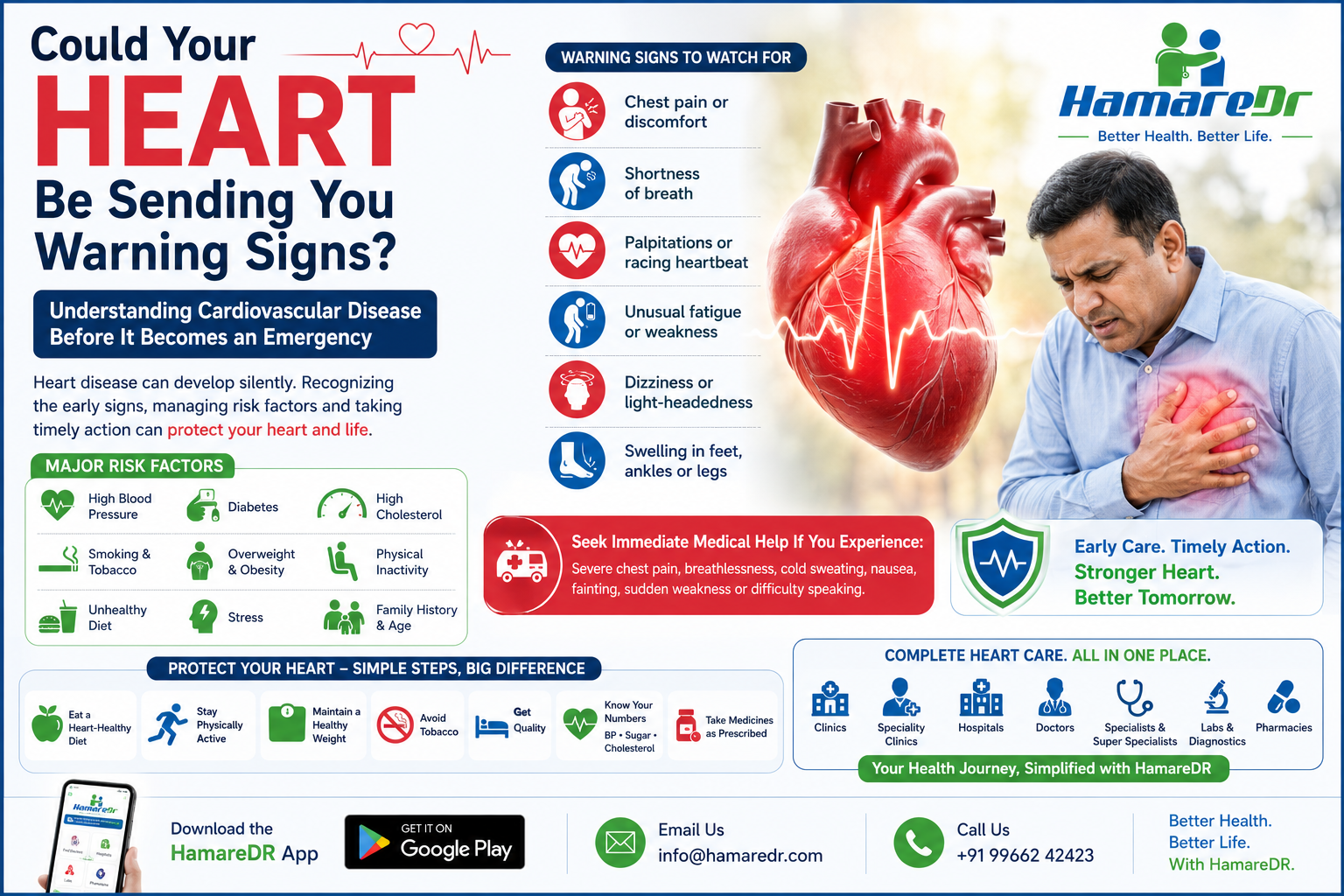
Chest discomfort, unusual breathlessness, unexplained fatigue, dizziness or a racing heartbeat can sometimes be warning signs of a cardiovascular problem. Learn about common symptoms, major risk factors, prevention, diagnostic evaluation and when heart-related symptoms may require immediate medical attention.
Is Your Heart Trying to Tell You Something?
Have you recently felt pressure, heaviness or discomfort in your chest?
Do you become unusually breathless after climbing a few stairs?
Does your heart sometimes feel like it's racing, pounding or skipping beats?
Are you experiencing unexplained fatigue or dizziness?
Maybe you've noticed these symptoms but dismissed them as stress, acidity, lack of sleep or simply getting older. Often, symptoms like these can have causes unrelated to the heart. But sometimes, they can indicate a cardiovascular problem that deserves medical attention. Understanding the warning signs can help you know when it's time to stop guessing and speak with a healthcare professional.
Cardiovascular disease, often abbreviated as CVD, is a broad term describing conditions affecting the heart and blood vessels. It includes conditions such as:
Coronary artery disease, Heart attack , Heart failure, Stroke and other cerebrovascular diseases, Heart rhythm disorders, Heart valve diseases, Peripheral arterial disease, One particularly common problem occurs when the arteries supplying blood to the heart become narrowed or blocked. Over time, fatty deposits known as plaque can build up inside artery walls. This process is called atherosclerosis. If blood flow to the heart becomes significantly reduced or suddenly blocked, serious complications such as a heart attack can occur.
What Are the Warning Signs of a Heart Problem?
Cardiovascular conditions don't always present in exactly the same way. However, symptoms that deserve attention can include:
Chest Pain or Discomfort : Some people describe it as pressure, squeezing, heaviness, tightness or burning rather than sharp pain. Shortness of Breath Feeling unusually breathless during normal activities or while resting can require evaluation.
Palpitations : A sensation that your heart is racing, pounding, fluttering or beating irregularly.
Unusual Fatigue : Persistent or unexplained tiredness can sometimes accompany cardiovascular conditions.
Dizziness or Fainting : Light-headedness, dizziness or fainting may have many causes, including certain heart conditions. Swelling in the Feet, Ankles or Legs Fluid accumulation can sometimes occur when the heart isn't pumping efficiently.
Discomfort Beyond the Chest : During some cardiac events, discomfort may spread to the arm, shoulder, back, neck or jaw. Not everyone experiences the same symptoms. And importantly, not every heart attack begins with dramatic or severe chest pain. “It's Probably Just Gas or Acidity”… But Is It ?This can be a dangerous assumption. Indigestion, acidity, muscular pain, anxiety and heart-related chest discomfort can sometimes feel similar. Trying to determine the cause yourself based only on how the discomfort feels isn't always reliable. If chest discomfort is new, severe, persistent or accompanied by breathlessness, sweating, nausea, fainting or pain spreading to the arm, back, neck or jaw, seek urgent medical attention. When potentially serious heart symptoms are involved, it is safer to get medically evaluated than to assume they are harmless.
Who Is at Greater Risk of Cardiovascular Disease?
Heart disease usually doesn't have a single cause. Several risk factors can combine over time. Some major factors include:
High blood pressure
Diabetes
High cholesterol
Smoking and tobacco use
Being overweight or obese
Physical inactivity
Unhealthy dietary patterns
Excessive alcohol consumption
Increasing age
Family history of cardiovascular disease
Chronic stress
Poor sleep
Some risk factors, such as age and family history, cannot be changed. Others can often be managed through lifestyle changes, regular health monitoring and appropriate medical treatment. Diabetes + Hypertension + Cholesterol
Our previous blogs discussed Type 2 diabetes and hypertension individually. But these conditions are also closely connected to cardiovascular health. Persistently high blood sugar can damage blood vessels over time. High blood pressure places additional stress on arteries and the heart. Abnormal cholesterol levels can contribute to plaque accumulation inside arteries. When several of these conditions occur together, cardiovascular risk can increase considerably. That's why managing your heart health isn't necessarily about visiting a cardiologist only after symptoms develop. Prevention begins with understanding and managing your risk factors.
There isn't one universal “heart test” suitable for everyone. A healthcare professional will first consider your symptoms, medical history, family history and risk factors. Depending on the situation, evaluation may include: Blood Pressure Measurement High blood pressure is an important cardiovascular risk factor. Blood Tests, Tests may assess cholesterol, triglycerides, blood glucose and other relevant markers.
ECG / EKG : An electrocardiogram records the electrical activity of the heart and can help identify certain rhythm abnormalities and other cardiac changes.
Echocardiogram : An echocardiogram uses ultrasound to examine the heart's structure and function.
Stress Testing : In appropriate patients, a doctor may recommend testing to evaluate how the heart responds to physical activity or controlled stress.
Additional Cardiac Investigations : Depending on symptoms and initial findings, specialists may recommend further diagnostic imaging or procedures. The appropriate investigation depends on the individual patient. Avoid undergoing unnecessary tests solely based on internet information. A doctor should determine what evaluation is clinically appropriate.
Not every cardiovascular condition is preventable, but many important risk factors can be reduced or controlled. Small habits maintained consistently can make a meaningful difference.
Eat for Your Heart : Prioritize vegetables, fruits, whole grains and appropriate sources of protein while reducing excessive salt, added sugars and highly processed foods.
Keep Moving : Regular physical activity supports cardiovascular health, blood pressure, weight management and metabolic health. If you already have heart disease or significant symptoms, speak with a healthcare professional before beginning a new exercise programmed.
Avoid Tobacco : Smoking and tobacco exposure significantly increase cardiovascular risk.
Maintain a Healthy Weight : Appropriate weight management can positively affect blood pressure, blood glucose and cholesterol. Know Your Numbers, Don't wait for symptoms before checking:
Blood Pressure • Blood Sugar • Cholesterol : These numbers can reveal cardiovascular risk factors before you feel unwell.
Take Prescribed Medicines Correctly : If you're being treated for diabetes, hypertension, high cholesterol or heart disease, take medicines according to your doctor's instructions. Never stop cardiovascular medication simply because you feel better.
Regular Care Matters Cardiovascular disease often requires long-term monitoring. Depending on your condition, ongoing care may involve:
General Physicians → Cardiologists → Super Specialists → Laboratories → Diagnostic Centers → Pharmacies
Your healthcare team may monitor blood pressure, blood glucose, cholesterol, heart rhythm, kidney function, medication response and other relevant indicators. This is where having access to an interconnected healthcare ecosystem can become particularly useful.
Certain symptoms should not wait for a routine appointment. Seek emergency medical attention if you or someone around you experiences symptoms suggestive of a heart attack, such as: Severe or persistent chest pressure, tightness or discomfort, Chest discomfort spreading to the arm, shoulder, neck, jaw or back, Significant shortness of breath , Cold sweating , Sudden nausea or vomiting with chest symptoms , Fainting or severe weakness Likewise, sudden facial drooping, weakness or numbness on one side of the body, difficulty speaking, confusion, loss of balance or sudden vision problems may indicate a stroke and require immediate emergency care. Do not use an online healthcare platform as a substitute for emergency medical services when potentially life-threatening symptoms are present. Your Heart Works 24/7.
When Did You Last Check on It?
You don't need to wait for chest pain before thinking about heart health. If you have diabetes, hypertension, high cholesterol, obesity, a family history of cardiovascular disease or other significant risk factors, talk to your healthcare provider about your cardiovascular health. Sometimes the most valuable medical appointment is the one that happens before an emergency occurs. Find the Right Healthcare Support with HamareDR From understanding your cardiovascular risk to consulting a doctor, getting diagnostic investigations, finding specialist care and accessing prescribed medicines, different stages of heart care can require different healthcare providers. HamareDR brings healthcare services together within one ecosystem, helping patients discover and access:
Clinics • Speciality Clinics • Hospitals • Doctors • Specialists • Super Specialists • Pharmacies • Laboratories • Diagnostic Centers
Whether you need a routine consultation, cardiovascular evaluation, laboratory testing, diagnostics or specialist care, find healthcare support through HamareDR.
Download the HamareDR Android App: Download on Google Play
Email: info@hamaredr.com
Call: +91 99662 42423
Don't Wait for Your Heart to Demand Attention. Know your risks. Recognize the warning signs. Get checked. Protect your heart.
Medical Disclaimer:
This article is intended for general health awareness and educational purposes only and does not replace professional medical advice, diagnosis or treatment. If you experience symptoms that may indicate a heart attack, stroke or another medical emergency, seek immediate emergency medical care.